Workshop for Students of Journalism and in Banja Luka PDF Print E-mail

radionica_blBanja Luka, 9 June 2010
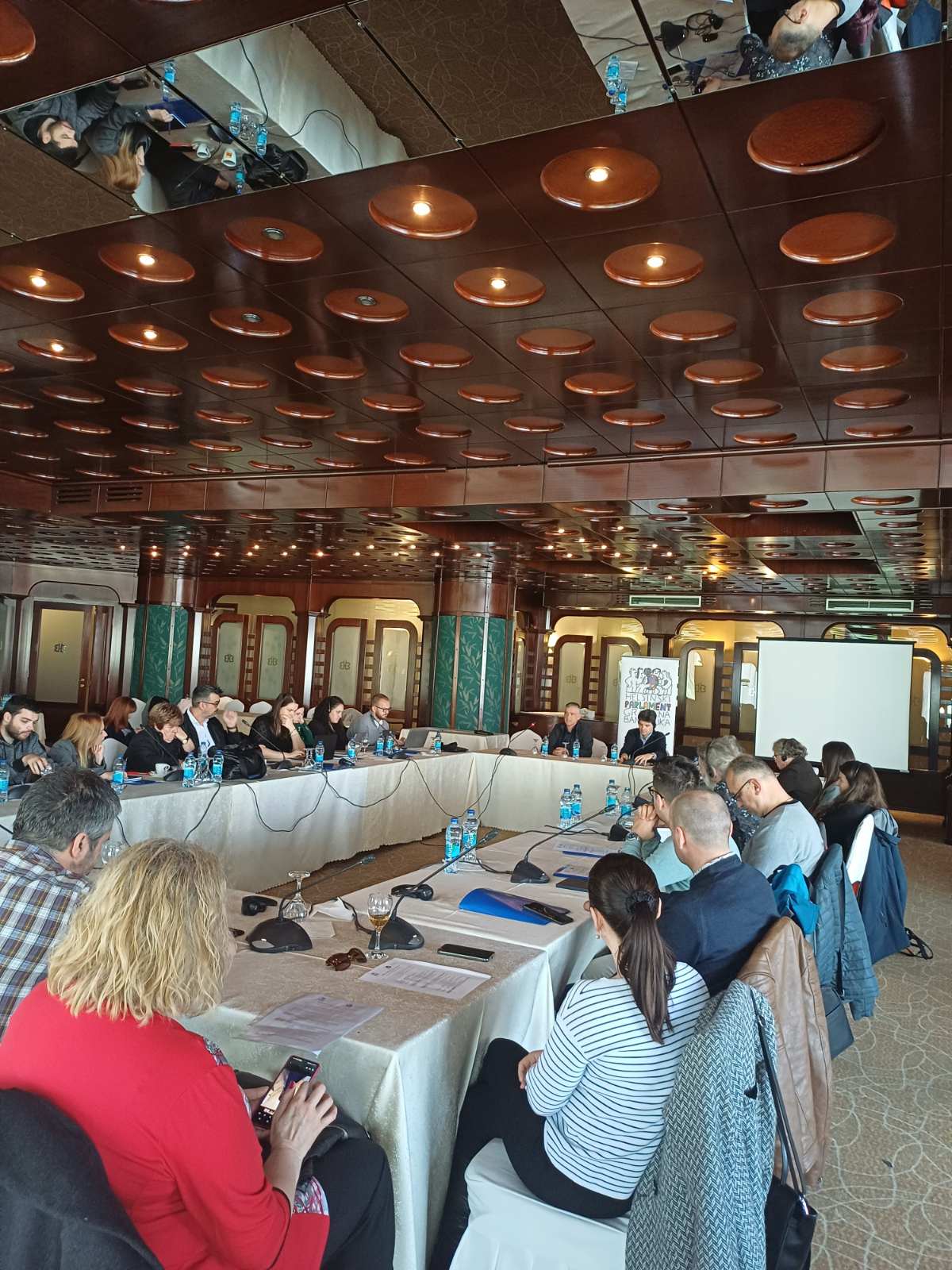
Banja Luka Faculty of Political Science hosted today a workshop for the fourth year students of journalism entitled: "Standards for the Reporting on Marginalized Groups”, moderated by journalist and NGO activist Aleksandar Zivanovic. In the introductory part of the lecture, Zivanovic talked about ethical standards in journalism, what and who can be classified as a marginalized group, and on what journalists need to pay attention to when reporting about these groups. “One of the important things to pay special attention to are the prejudices and stereotypical representation of certain social groups”, Zivanovic stressed, adding that journalists should constantly review whether they presented with a stereotypical view a particular marginalized groups, about which they have made a written text or report. All the students said that they have prejudices against certain groups, particularly against members of LGBTIQ population, and towards members of other religious communities and / or political groups. The most interesting and certainly the most dynamic part of the workshop were the exercises related to analyzing newspaper articles, where students were supposed to detect errors in  reporting on marginalized groups. Students were most interested in the work and decisions of the CRA and the Press Council, and problems in connection with the live broadcast, when the interlocutors or viewers use the program for incorrect speech or hate speech.

 
The Workshop for Journalism Students PDF Print E-mail

Tuzla, 02 June 2010
The Faculty of Philosophy in Tuzla hosted a workshop on 31 May, entitled "Standards for the reporting on the marginalized groups."
The workshop was moderated by journalist Milkica Milojevic, with the attendance of 17 female and male third year journalism students.
Milojevic made the students acquainted with the most vulnerable marginalized groups in our society and the manner in which the media report on them. "Apart from being far from partaking in the decision making process, these groups are also ignored by media, which further marginalizes them, also distancing them from the possibility to enjoy all the rights guaranteed by the Constitution," pointed out Milojevic.
A big problem regarding media representation of different marginalized groups is stereotyped reporting, which, according to the Milojevic, is the result of journalistic negligence, tabloidization, lack of knowledge, of sympathy and of courage, but also unwillingness of journalists to accept the challenge. Special attention, according to her words, should be given to language and terminology used when reporting on marginalized groups, in order to avoid the use of offensive and discriminatory language, that often calls for open resistance and hatred towards certain minority groups.
What a journalist needs to be guided with is professionalism and adherence to code and laws when it comes to reporting on marginalized groups, said Milkica Milojevic.
radionicaTuzla, 02 June 2010
The Faculty of Philosophy in Tuzla hosted a workshop on 31 May, entitled "Standards for Reporting on the Marginalized Groups."  The workshop was moderated by journalist Milkica Milojevic, with the attendance of 17 female and male third year journalism students.
Milojevic made the students acquainted with the most vulnerable marginalized groups in our society and the manner in which the media report on them. "Apart from being far from participating in the decision making process, these groups are also ignored by media, which further marginalizes them, also distancing them from the possibility to enjoy all the rights guaranteed by the Constitution," pointed out Milojevic.
A big problem regarding media representation of different marginalized groups is stereotyped reporting, which, according to the Milojevic, is the result of journalistic negligence, tabloidization, lack of knowledge, of sympathy and of courage, but also unwillingness of journalists to accept the challenge. According to her, special attention should be given to language and terminology used when reporting on marginalized groups, in order to avoid the use of offensive and discriminatory language, that often calls for open resistance and hatred towards certain minority groups.
When it comes to reporting on marginalized groups, a journalist needs to be guided with professionalism and adherence to code and laws, said Milkica Milojevic.

 
“There are more of us” initiative PDF Print E-mail
28th May 2010
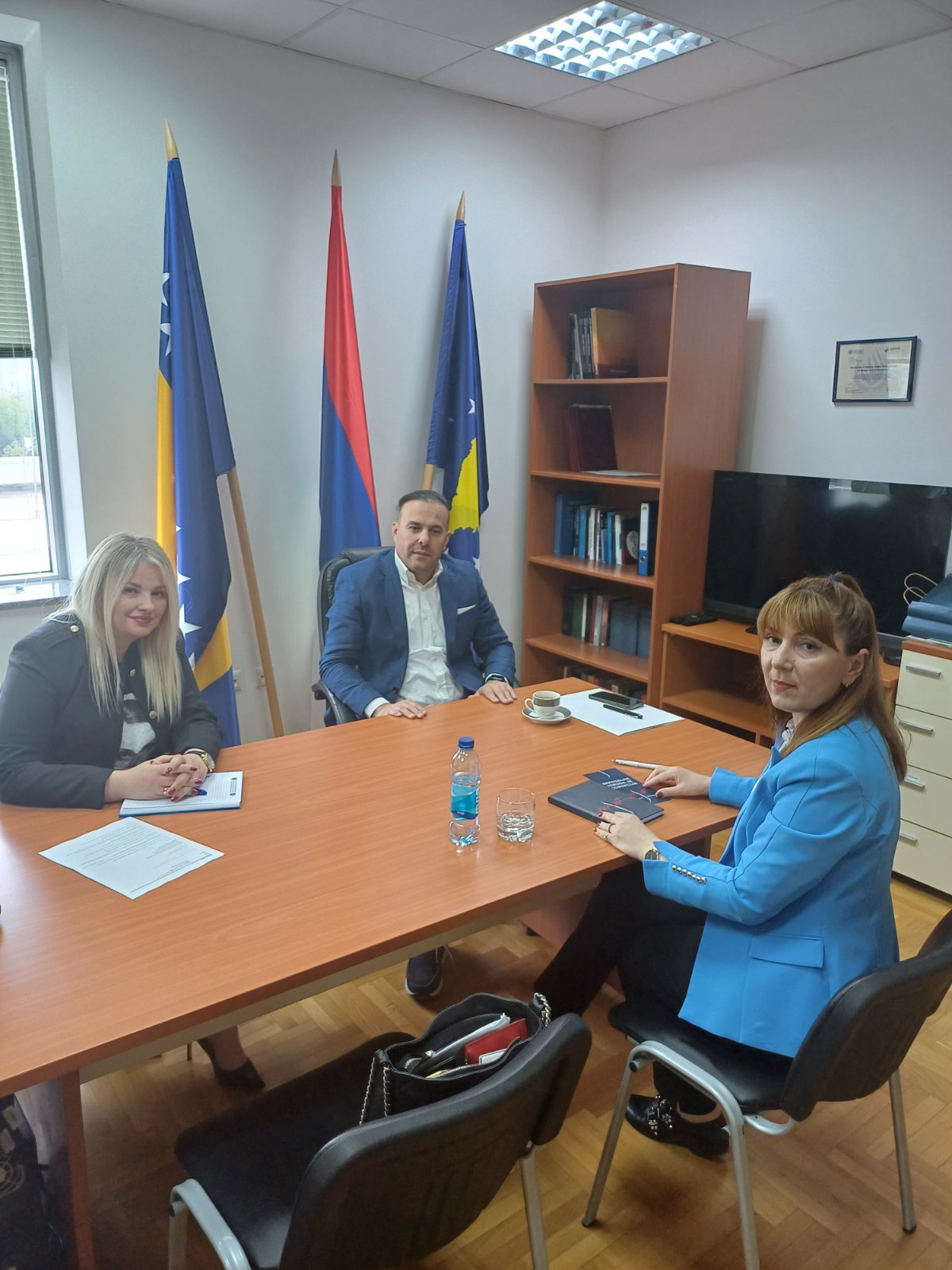
Within the initiative "There are more of us" that brings together eight NGOs from Bosnia and Herzegovina, and which is supported by the Gender Task Force Regional Centre for Gender Equality, a working meeting was held in Banja Luka with the female mayors of BiH municipalities, in the organisation of the United Women Banja Luka and the Helsinki Citizens' Assembly Banja Luka. Out of four elected female mayors, three took participation in this meeting: mayor of Kalinovik Milena Komlenović, of Novi Grad Snjezana Rajilić, and of Drvar Anka Papak - Dodig.
Mayors were presented with the initiative "There are more of us", and planned activities under this initiative, while discussion was led about the goal of the meeting which was to find out what their experience has been during their campaigns and what is the situation in their municipalities since they assumed the new posts of mayors, asking them whether they have already made plans about the activities to be conducted during their forthcoming election campaign.
Experiences were similar when it comes to the campaigning at the last local elections. Ms. Railić says that she won the most votes out of all women who were running as candidates in elections in the past ten years, but that during her election campaign she had pass most kilometres and raise loans to finance her own campaign.
As for Kalinovik and Drvar, both mayors also worked very hard in the campaigns to gain positions which they are currently holding, while the mayor of Kalinovik said she had to fight against double prejudices because in Kalinovik, electorate in average is older than 50 years, and were of the opinion that she would not be a good mayor for two reasons: first because she is a woman and the other because she is young. "When you face such a situation, you must be wise to approach it from different perspectives, therefore I always brought my deputy with me and answered such questions with “I have him to help me”.
As for the situation in their municipalities, it is as satisfactory as it can be in a poor country; they have introduced new ways of management in their municipalities, meaning regular meetings with their associates in other to assign responsibilities, tasks and obligations for the sake of more productive work, which their predecessor never did.
When talking about activities in the election campaign, some of them have already started with meetings, electorate is being counted in Drvar because some voters left municipality, some are dead ....
Ms. Railić pointed out that the strategy is being prepared in her municipality  where she is the president of party’ municipal board. There are local boards being established which are developing their own strategies as Novi Grad has no local community building.
In Kalinovik preparatory meetings are also ongoing, aimed at developing strategies.
This meeting was used to urge mayors of these municipalities to appeal to the electorate to give their votes to women candidates at the upcoming elections, with the explanation that the BiH Election Law requires that at least 30% of less represented gender hold positions of decision makers, while the Law on Amendments and Changes to the Law on Gender Equality in BiH, Article, 15 says that there has to be at least 40% of less represented gender at all levels of government.

28th May 2010
Within the initiative "There are more of us" that brings together eight NGOs from Bosnia and Herzegovina, and which is supported by the Gender Task Force Regional Centre for Gender Equality, a working meeting was held in Banja Luka with the female mayors of BiH municipalities, in the organisation of the United Women Banja Luka and the Helsinki Citizens' Assembly Banja Luka. Out of four elected female mayors, three took participation in this meeting: mayor of Kalinovik Milena Komlenović, of Novi Grad Snjezana Rajilić, and of Drvar Anka Papak - Dodig.
Mayors were presented with the initiative "There are more of us", and planned activities under this initiative, while discussion was led about the goal of the meeting which was to find out what their experience has been during their campaigns and what is the situation in their municipalities since they assumed the new posts of mayors, asking them whether they have already made plans about the activities to be conducted during their forthcoming election campaign.
Experiences were similar when it comes to the campaigning at the last local elections. Ms. Railić says that she won the most votes out of all women who were running as candidates in elections in the past ten years, but that during her election campaign she had pass most kilometres and raise loans to finance her own campaign.
As for Kalinovik and Drvar, both mayors also worked very hard in the campaigns to gain positions which they are currently holding, while the mayor of Kalinovik said she had to fight against double prejudices because in Kalinovik, electorate in average is older than 50 years, and were of the opinion that she would not be a good mayor for two reasons: first because she is a woman and the other because she is young. "When you face such a situation, you must be wise to approach it from different perspectives, therefore I always brought my deputy with me and answered such questions with “I have him to help me”.
As for the situation in their municipalities, it is as satisfactory as it can be in a poor country; they have introduced new ways of management in their municipalities, meaning regular meetings with their associates in other to assign responsibilities, tasks and obligations for the sake of more productive work, which their predecessor never did.
When talking about activities in the election campaign, some of them have already started with meetings, electorate is being counted in Drvar because some voters left municipality, some are dead ....
Ms. Railić pointed out that the strategy is being prepared in her municipality  where she is the president of party’ municipal board. There are local boards being established which are developing their own strategies as Novi Grad has no local community building.
In Kalinovik preparatory meetings are also ongoing, aimed at developing strategies.
This meeting was used to urge mayors of these municipalities to appeal to the electorate to give their votes to women candidates at the upcoming elections, with the explanation that the BiH Election Law requires that at least 30% of less represented gender hold positions of decision makers, while the Law on Amendments and Changes to the Law on Gender Equality in BiH, Article, 15 says that there has to be at least 40% of less represented gender at all levels of government.

 
Amendments to the RS Family Law PDF Print E-mail


izmjene porodinog zakona
Banja Luka, 28 May 2010

On 27 May 2010, at Hotel “Atina”, the Helsinki Citizens' Assembly Banja Luka organized a round table entitled "Amendments to the Family Law RS" in Banja Luka within the project “Integration and Social Inclusion towards Active Citizenship”. Over 20 participants were present at this round table, including representatives of civil society, ministries of Government, Center for Social Work Banja Luka, RS Ombudsman for Children as well as representatives of the Law Faculty in Banja Luka. During this two-hour roundtable, an initiative for amendments to the Family Law RS was presented, initiated by the Ombudsman for Children RS, HO "Partner" and the Helsinki Citizens’ Assembly Banja Luka, and supported by 12 non-governmental organizations from Republika Srpska. As the Ministry of Justice of Republika Srpska adopted the initiative and appointed a working group, the most members whereof were present at the roundtable, the participants jointly discusses about these actions, and based on experiences they had gained working in their respective organizations or institutions, they formed a set of recommendations that should contribute to creating better and useful text amendments to the RS Family Law RS. Nikola Kovacevic, Assistant Minister of Justice said that the working group could meet as early as during the next month, however, the text of amendments to the Family Law should not be expected to appear at the RS Assembly for discussion before the end general elections scheduled in 2010. Helsinki Citizens' Assembly Banja Luka implements the project "Integration and Social Inclusion towards Active Citizenship" in partnership with Bureau for Human Rights Tuzla, which is  funded by the European Union.

TS


Workshop: "Writing and Budgeting Projects" PDF Print E-mail


picture 023aBanja Luka, 18 July 2010

The workshop was attended by representatives of NGOs that are newly established or in the registration process, as well as new members of already existing organizations: Oštra nula, Equilibrium, Single Parents Association "Ponos", Majka Priroda, National Minorities Allience and the Association of Italians from Banja Luka, the members of "Partner" from Kozarska Dubica and Laktasi, Astra from Šipovo, Arka from Han Pijesak, and organizations “Rudarka” and Single Parents Association from Ljubija. The trainer of the workshop was the MA Natalija Petric, a longtime activist of United Women Banja Luka, who guided the participants through the process of analyzing and defining a problem, the basic forms of writing narrative and financial parts of the project proposal, and the presentation of the project. The project is funded by the Foundation Open Society Institute.


<< Start < Prev 1 2 3 4 5 6 7 8 9 10 Next > End >>

Page 3 of 13

Location

Annual Report 2009

izvjestaj2009_en-1