Project: “Neighbourhood – Affirmation of Multiculturalism and Co-operation on Municipal Level in the Countries of Western Balkans” PDF Print E-mail

Helsinki Citizens' Assembly Banja Luka launched in May 2009 a two-year project titled "Neighborhood - Affirmation of Multiculturalism and Cooperation at the Municipal Level in the Western Balkans". The project will be implemented in Bosnia and Herzegovina, Serbia, Croatia and Slovenia, in cooperation with partner organizations in these countries, as well as the Union of National Minorities RS.

The project aims to determine the extent to which municipal policies respect local legislative, as well as European and international standards in regards to the protection of rights of national minorities, and to make recommendations for improving the status of national minorities at the municipal level, and effectively resolve problems that members of are minorities face with.

The project will include a series of local and regional workshops and seminars, with the aim for the representatives of municipal authorities, national minorities, and civil society actors to start a dialogue and exchange of experience on changes and development of local policies that will fully respected the needs of members of various national minorities.

The project is funded by the European Union.


EU_flag


ii_lok_radionica_blAction plan for better cooperation between Assembly representatives of national minorities and Banja Luka minority associations agreed
Banja Luka, 7 July 2010
Representatives of Banja Luka Associations of National Minorities, Department for National Minorities of the City Administration, the Council for National Minorities of Banja Luka Assembly, and deputy in the City Assembly selected on behalf of national minorities, gathered on 1st July at a workshop entitled "Local Authorities and Minorities - Cooperation and Dialogue" organized by the Helsinki Citizens' Assembly Banja Luka, to discuss improvement of cooperation between national minorities and assembly authorities , and the model of financing their associations by the city administration.
The workshop resulted in recommendations for all stakeholders in terms of assuming  certain duties in the coming period in order to establish regular communication between the assembly bodies responsible for improving the status of minorities and associations which bring together representatives of national minorities, as well as further improvement of a model of financing minorities by the City Administration.
This workshop is in fact a kind of continuation of the workshop held in March this year, where participants in similar composition identified some of the priority issues of importance to minorities which could be resolved in realistic time frames. At that workshop, it was concluded that the Council for National Minorities of Banja Luka Assembly is not fully acquainted with the problems faced by members of national minorities, and that the representatives of national minorities should be included in the work of this body. On that occasion, the need was expressed to bring closer assembly deputy with minorities’ associations, and to have this deputy advocate more for minorities’ needs  in this legislative body, since the deputy was initially elected as the legitimate representative of the interests of national minorities in the city of Banja Luka.
All participants have agreed this time which steps need to be taken in the near future to better connect Assembly Council with Associations of National Minorities, through the following activities: Chairman of the Council of National Minorities of Banja Luka and President of the Alliance of National Minorities RS will invite each other to meetings of bodies that preside over, while the first such meeting will be organized in July. At this coming meeting, the president of the Council, Zdravko Ruzela will make the members of the Coordination Body of RS Alliance of National Minorities RS familiar with effects of the Council’s work and discuss the possibility for minorities’ representatives to attend meetings of this working body, as it discusses issues relevant to their members.
Helsinki Citizens' Assembly Banja Luka will continue to mediate in facilitating their cooperation, primarily in order to enable the influence of minorities in the work of the Council, in accordance with the legal possibility of participation of minorities in decision-making process at the municipal level. In this regard, the workshop resulted in the recommendation that the Banja Luka minorities’ associations will submit to the city Assembly, prior to next local elections, their version of the future election of members of the Council of National Minorities (half of the Council members consists of deputies, ie members of political parties, while the other half should consist of representatives of national minorities).
During discussion about financing associations of national minorities, positive attitude toward regular and planned funding for their work was reiterated, according to which running costs of city club of national minorities is fully covered while cultural programs are being co-financed. The area which is problematic is non-participation of minorities’ associations in defining the procedure for the allocation of budget means and lack of funds for emergency activities of associations such as some special visits of delegations coming from their countries o descent, as well as participation in some important gatherings at which decisions about minorities are being made, and where the participation of minorities is of crucial importance.
In this regard, recommendations from this workshop is to introduce responsibility of the assembly and administrative authorities of Banja Luka city to present to representatives of national minorities with opportunities for competing for “outstanding means” which could enable them to organize or finance the important activities that are not provided in their regular annual programs, as well as to open possibility for minorities to partake in defining procedures for the budget allocation.
The workshop was held under the project "Neighborhood - affirmation of multiculturalism and cooperation at the municipal level in the Western Balkans”, which is funded by the European Union, and this workshop was supported by Friedrich Ebert Foundation.

Municipal Authorities and national minorities from the region participated at the workshop in Banja Luka
reg_radBanja Luka, 13 May 2010
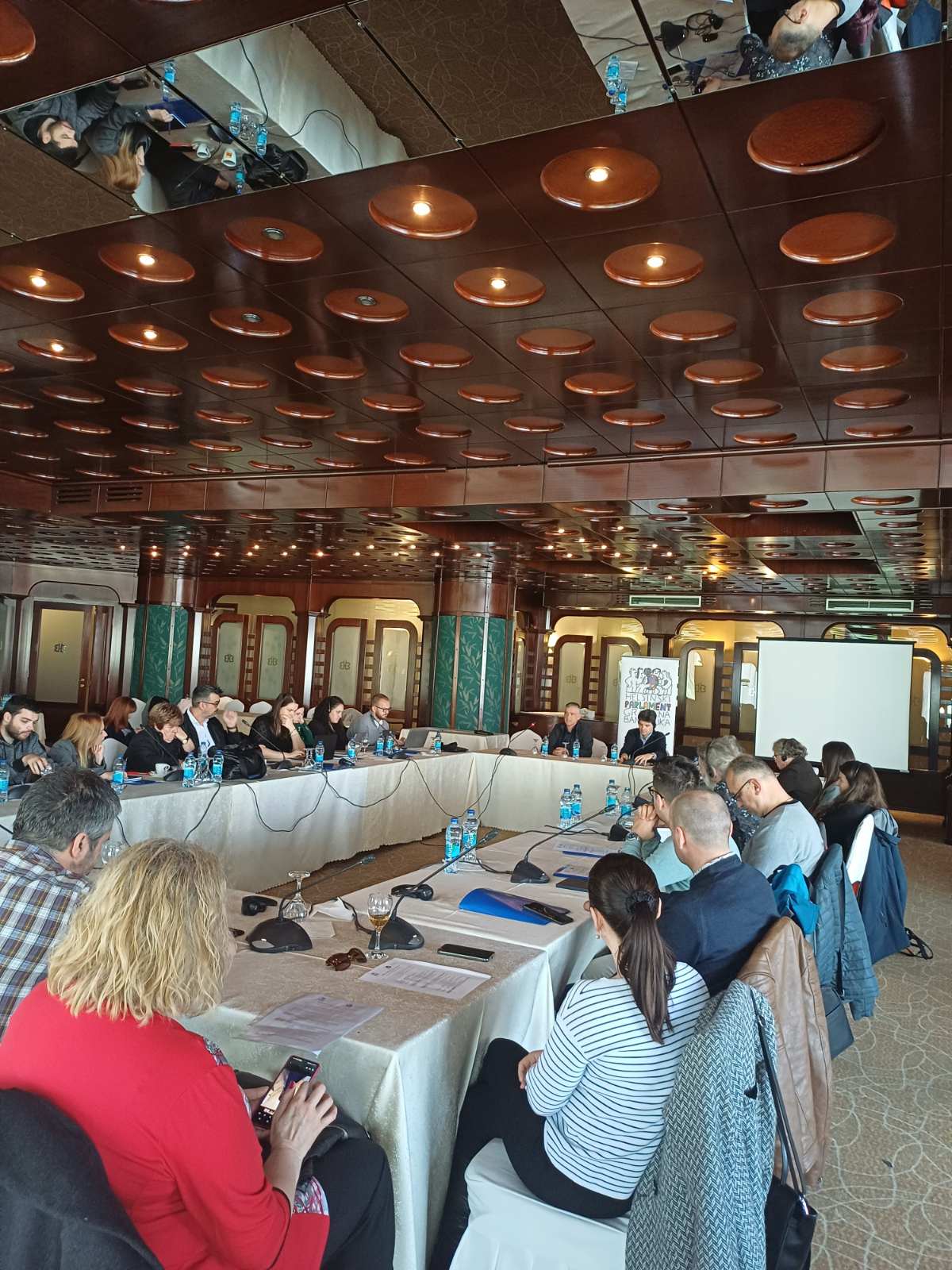
Helsinki Citizens Assembly Banja Luka in cooperation with Center for Regionalism from Novi Sad, Association for the Protection of Human Rights and Civic Freedoms HOMO Pula and the Association of National Minorities RS, organised on 10 and 11 May, 2010 in Banja Luka a regional workshop on "Municipal authorities and national minorities - cooperation and dialogue," which brought together over 30 representatives of national minorities and local authorities dealing with issues of national minorities from Serbia, Croatia and BiH.  During the two-day work, participants exchanged best practices in cooperation between the municipality and national minorities, identified some of the obstacles to improving the position of national minorities, and set guidelines for further joint work which includes a cross-border cooperation.
Among other things, participants will at the regional workshops to come discuss ways of lobbying for the modification of certain municipal regulations, as well as models of practical application of positive legal norms regulating minority issues. They recognized the need for a clear definition of cooperation between municipal authorities and minorities foreseeing joint work in the development of minority policies, and constant education of minorities about all the processes of importance to them that are being led on the local level.
Lidija Zivanovic, Director of Helsinki Citizens’ Assembly Banja Luka, stressed the importance of minorities being united in presentation of their needs, considering that minorities’ associations often act individually towards the institutions dealing with the protection of their rights. “Given the number of national minorities in BiH, it is extremely important that they be united in their demands to achieve a better position, because division among them leads to the weakening of their capacity to implement legally recognized rights," said Zivanovic.
Sasa Popov from the Center for Regionalism, Novi Sad assessed that the potential continuation of this project should incorporate study between municipalities order to exchange as many good practices, but also introduce a kind of mentorship, where municipalities with satisfactory achievement of minority rights could direct other municipalities on their way towards reaching better protection and the position of minorities.
Workshop participants within working groups discussed the priority goals for each country. Group from BiH repeated criticism for not applying this decision of the Court of Human Rights regarding amendments to the BiH Constitution offensive category "Others", and lacking of the BiH Election Law, which follows this highest legal act of the state. Municipalities in BiH have also identified the need to more clearly determine the frames of cooperation with the deputies on behalf of national minorities, and to introduce the practice of their regular meetings with minorities. In addition, municipal and minority representatives expressed the need for joint education on how to access EU funds so that, eventually, they could jointly apply for these funds supporting the implementation of minority policies.
Regional Workshop was organized as part of the Neighborhood - affirmation of multiculturalism and cooperation at the municipal level in the Western Balkans project, which is financially supported by the Open Society Fund BiH and the European Union.

Expressed Willingness to Form a Body for Cooperation with National Minorities

radionica_prijedorPrijedor, 8 April 2010

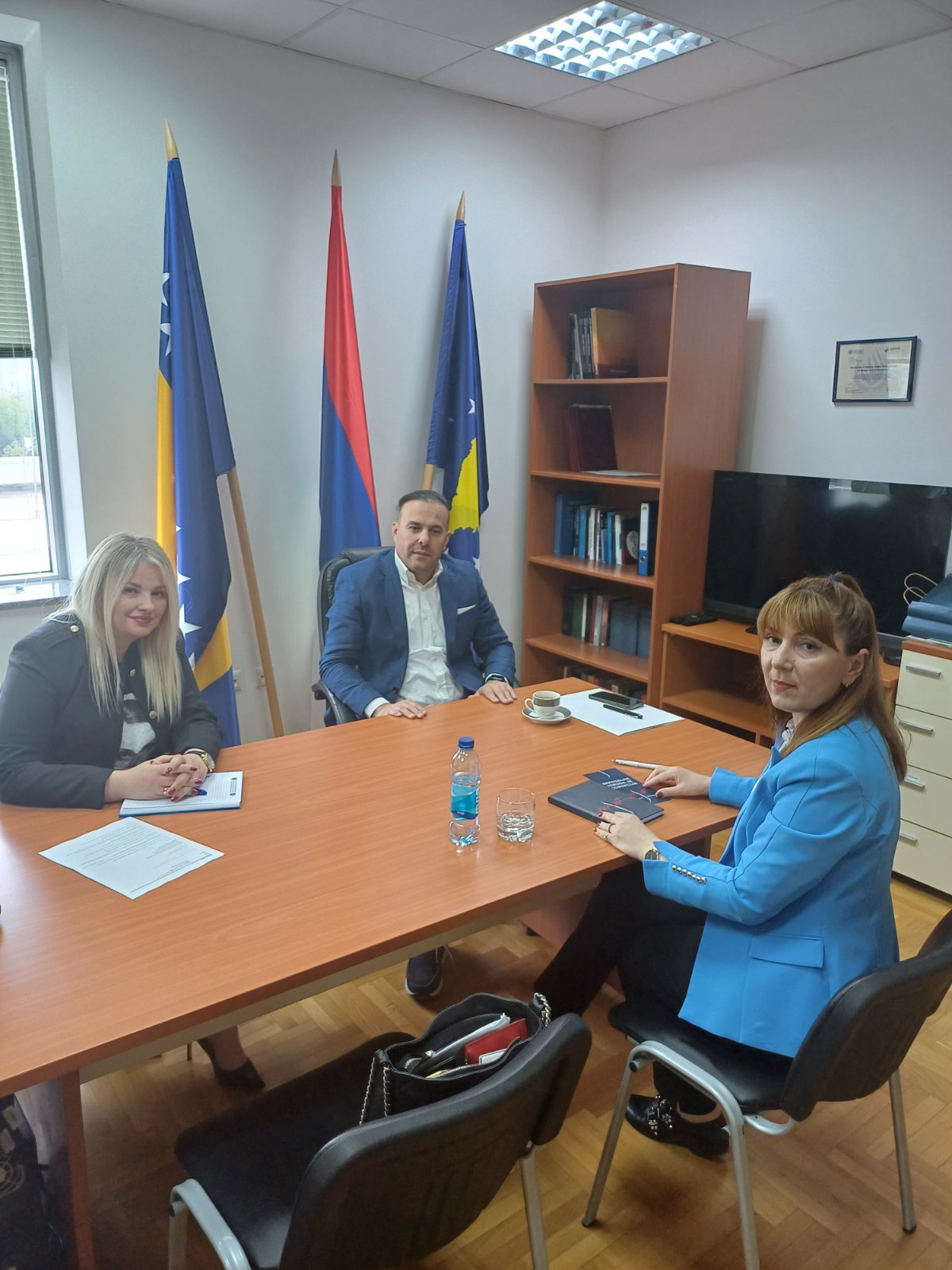
There is no Council for National Minorities in Prijedor Municipal Assembly that would advocate for improving position of national minorities. Also, no administrative body, according to the rule book, is responsible for working with national minorities. Establishment of the body that would be responsible for cooperating with national minorities would enable better fulfilment of minorities’ legal rights – this was agreed by the Prijedor municipality representatives and national minorities at the round table held by the Helsinki Citizens’ Assembly Banja Luka in Prijedor on Thursday, 8 April, 2010.

The round table included presentation of the study „National Minorities Rights and Municipal Policies – A Study on the Application of Standards Regarding the Protection of Rights of National Minorities in BiH, Serbia, Croatia and Slovenia.”

The Study aimed to analyze compliance of municipal documents with international and domestic legal norms and standards regarding the protection of national minorities’ rights, and to determine the extent of practical application of local policies in relation to cooperation and improving the position of national minorities.

This presentation held in Prijedor, which apart from Banja Luka and Tuzla is involved in the Project „Neighbourhood“ on the BiH territory, stressed the main difference between Serbia and Croatia regarding the protection of national minorities, which is that these countries provide the mechanisms for direct participation on national minorities in decision-making. In Tuzla and Banja Luka, there are commissions/departments/councils for national minorities, as well as bodies of local self-government, but the scope of their work is very limited, while their composition includes mostly deputies, meaning members of political parties, and not the members f national minorities, while Prijedor does not even have such a body.

In addition, the round table focused on discussion about the Prijedor Assembly deputy who, according to the words of national minorities’ representatives, does not represent their interests, but the interests of political parties on behalf of which he was elected.

National minorities praised Prijedor local authorities for regularly allocating certain financial means for the work of national minorities, in accordance with the RS Law on Protection of National Minorities’ Rights.

Participants agreed that there is a good general communication between the municipality and minorities, and that there are no serious violations of minorities’ rights in the municipality. They especially commended the efforts of municipality to solve the housing and educational needs of Roma population as the biggest minority in Prijedor.

The round table ended with the conclusion that the municipal authorities and associations of national minorities will in the coming period jointly discuss the forming of administrative body that would cooperate with national minorities, and that they will additionally consider Study’s observations in order to enable ful satisfaction of national minorities’ needs in the municipality.

The holding of this round table was supported by Friedrich Ebert Foundation while the project Neighbourhood” is funded by the European Commission.


National Minorities Rights and Local Policies

29 March 2010

A local workshop on national minorities rights within municipal context was held as part of the regional project “Neighborhood – Affirmation of Multiculturalism and Cooperation at Municipal Level in the Countries of Western Balkans” in Banja Luka on March 25, 2010, which served, among other things, for presentation of publication “National Minorities Rights and Municipal Policies – A Study on the Application of Standards Regarding the Protection of Rights of National Minorities in BiH, Serbia, Croatia, and Slovenia”.

The publication is the result of months of research that was conducted from September to December 2009 in nine municipalities in Bosnia and Herzegovina, Serbia and Croatia, with the main goal to assess compliance with applicable local policy standards regarding protection of the rights of national minorities.

The research results were presented by the hCa activist, Maja Kremenović, and one of the researches, Željka Žolja, together with Radomir Šovljanski, the representative of Center for Regionalism from Novi Sad, and Mirjana Galo from Association for Protection of Human Rights and Civil Liberties “HOMO” from Pula.

In the introductory part of the workshop, the sociologist Slobodan Nagradić presented European documents that guarantee the rights of national minorities, and that BiH has ratified, and he also mentioned experiences of some European countries in the process of joining the European Union.

The aim of the workshop was to analyze the status and rights of persons belonging to national minorities in Banja Luka municipality, as well as policies and measures implemented by the local authorities within this context.

Representatives of the Administrative Service of Banja Luka had a few comments pertaining to the very name of the publication, as well as the fact that the publication did include data on the allocation of significant funds from the city budget for the construction of housing for Roma in the settlement of Veseli Brijeg.

Head of the Banja Luka Department for Refugees, Displaced Persons, Returnees, Religious Affairs and National Minorities, Vladimir Đukelić, pointed out that the Statute of Banja Luka City was among the first ones to be harmonized with all relevant documents concerning the protection of minority rights. Talking about the transparency of financial allocation for the work of associations of national minorities, Đukelić said that funds from city budget were allocated on the basis of activities report submitted by minorities’ associations, and the proposed work program for the coming year.

Other topics discussed at the workshop were the Election Law of BiH and judgments of the European Court of Human Rights in the case Sejdić-Finci, which ordered Bosnia and Herzegovina to amend discriminatory provisions of the Constitution of BiH that denied rights to the representatives of national minorities to be elected as members of the Presidency and the House of Peoples of the BiH Parliament.

Commenting on this ruling Stevo Havreljuk, chairman of the National Minorities’ Alliance of RS, said that "the minorities have been left to themselves to solve this problem," and that "the authorities still have not submitted any proposal to the direction of the Constitution changes on this issue" .

"There is no a single authority at any level of government that would professionally deal with issues of national minorities," said Havreljuk.

The conclusion of the workshop was to improve communication between members of municipal representatives and national minorities, and that the associations themselves had to be better organized and define their priorities more clearly to have more effective approach towards the authorities.

The workshop was organized with financial support from the Friedrich Ebert Foundation, and the project "Neighborhood" is funded by the European Union.


Let's Learn About National Minorities - Class of Multiculturalism

12 November 2009

Where is pizza coming from? Who brought potato to BiH? Do you know that the Count Dracula was a real historical person? We discussed these and many other issues with the pupils of fifth and seventh grade of Primary School "Cirilo and Metodije“ from Trnopolje within the class "Let's learn about national minorities“ which was organised by the Helsinki Citizens' Assembly Banja Luka and the Republic Srpska Alliance of National Minorities.

„We tried to illustrate to the pupils of 5th and 7th grade the importance of co-living with national minorities, because such a cohesion can only enrich our lives, enable us to learn from each other, and expand our views, which ultimately leads to a greater tolerance, understanding and mutual respect“ stated Maja Kremenovic, Assistant on the project "Neighbourhood – Affirmation of Multiculturalism and Co-Operation on Municipal Level in the Countries of Western Balkans“.

The class began with pupils talking about national minorities BiH, how they arrived to our country, what is specific to each national minorities and what we have taken over from national minorities' tradition and culture. After that, pupils were broken down into groups where they discussed particularities of a national minority, in the end presenting their findings about certain national minority during their group work. According to the pupils' comments, the most interesting was to hear the legends about national minorities and to learn few words from their languages.

„Trnopolje is generally a multicultural environment. We thought that this school would give us an opportunity to see how much pupils knew about each other, as members of national minorities with who they shared their everyday life. We were pleased with the level of awareness about national  minorities in BiH, and especially with the pupils’ high interest in the culture of national minorities and their history“ says Danijel Kovc, Assistant in the RS Alliance of National Minorities.


“European Day of Languages – Language as Cultural Identity”

25 September 2009

Helsinki Citizens’ Assembly Banja Luka, in co-operation with Republic Srpska Alliance of National Minorities, organised on Thursday, 24th September, a round table entitled European Day of Languages – language as cultural identity, as a part of the project “Neighbourhood – Affirmation of Multiculturalism and Co-operation on Municipal Level in the Countries of Western Balkans”.

The goal of the round table was to support protection and further strengthening of language tradition of national minorities, as a key element for their cultural identity and heritage. All attendees agreed that minority languages were facing oblivion, considering that these languages were mainly being nourished in private and family sphere, highlighting that it was necessary to ensure greater support by authorities towards institutional and systematic preservation of this cultural richness.

Round table led to initiation of support by the RS Ministry of Education and Culture towards organising classes of Ukraine language for the pupils of Ukraine nationality in Banja Luka municipality, who are geographically not located at one place, but would be gathered in one school for the purpose of learning their mother tongue.

Round table hosted representative of the RS Ministry of Education and Culture, Republic Pedagogical Institute, Banja Luka Municipal Assembly, OSCE Mission to BiH and numerous representatives of national minorities’ associations.

Vedrana Dimitrijevic, coordinator of the project Neighbourhood, opened the round table by highlighting importance of mother tongue protecting as the foundation for linguistic, cultural and national identity and tradition. She explained that minority languages in BiH were mostly nourished inside the family, “but as this heritage is a part of the overall cultural richness, authorities should invest more efforts in ensuring survival of linguistic diversity, knowing that respect of different cultures, tolerance, and mutual appreciation and understanding of others are the best guarantee of peace and security” added Dimitrijevic.

President of the RS Alliance of National Minorities, Stevo Havreljuk, presented the European Charter on Regional and Minority Languages that BiH is to ratify. As for the situation in the Republic Srpska, Havreljuk stressed that national minorities managed to preserve their mother tongue by using it mainly within their families, religious sermons and activities inside their cultural and art associations. He added that apart from the classes of Ukraine and Italian in Prnjavor, associations are left to themselves in organising courses and teaching of mother tongue.

Ranko Savanovic from the RS Ministry of Education and Culture of RS stressed that his Ministry was ready to support initiatives for learning language, history and culture of national minorities, even going beyond the legal provision on necessary absolute or relative majority on a certain territory. “Problems in those regards are the lack of educated staff, printing and preparation of textbooks, but also lack of initiatives by national minorities for expanding the scope of mother tongue teaching, as it happened in one case that the Ministry had to pay for the teacher of two children, and this should clearly be more rationalised”.

Except for Slovenians, who have been for over a decade organising classes for teaching Slovenian language, most of associations have problems in financing language courses. In that sense,  Roma suggested that the RS Government should financially help education of staff for teaching Roma language, and enable the assistance of experts from other countries in making textbooks for teaching Roma language in BiH.

“Municipality has until now and will in the future try to meet all realistic requests by national minorities” said Vladimir Djukelic from Banja Luka Administrative Service but added that a much bigger problem was a discriminatory constitutional provision, according to which national minorities are listed as others. “This inevitably leads towards assimilation, as there will be less and less national minorities identifying themselves as such”.

Round table participants expressed great interest in institutionalising the teaching of mother tongue for adults. Savanovic explained that the Law on Adult Education was in the process of adoption and that according to the Law, the Institute for adult education should be formed, which would surely include this aspect of adult education in its portfolio.

V. D.


Announcement: Local Policies Research

20 July 2009

Helsinki Citizens’ Assembly will launch a three months research in September, within the project “Neighbourhood - affirmation of multiculturalism and co-operation on municipal level in the countries of Western Balkans”, the aim of which is to determine to what extent municipal policies and practices are harmonised with local legislation and international conventions from the field of protection of national minority rights.

Apart from analysing municipal documents and surveying local authorities, the research will include interviews with representatives of national minorities’ associations in order to determine their realistic status on the local level and possibility for satisfying and fulfilling their rights and needs in accordance with the legislation.

As for Bosnia and Herzegovina, the research will involve municipalities of Banja Luka, Prijedor and Tuzla. In parallel to this, the research will be conducted in Croatia (municipalities of Pula, Vodnjan and Umag) and Serbia (Zrenjanin, Bor and Bujanovac) with consulting assistance from Slovenian Helsinki Monitor for Human Rights,

Research results, together with comparative analysis of the situation in all three countries, as well as with recommendations for improving local policies, will be published in the form of Study in the end of 2009. The study will serve as the basis for the further project implementation in these three countries.


Conference in Brussels

9 July 2009

On the 6th and 7th July, Helsinki citizens’ Assembly took part at the Conference in Brussels which focused on the projects funded by the European Commission in the Western Balkans region, as a part of the program “People to People Action”. EC funded projects are directed at consolidating partnership between civil society organisations and public authorities aiming for enhanced respect for minority rights in the region.

The goal of the conferences was to enable representatives of the civil society organisations from the Western Balkan, currently implementing  EC funded projects, to familiarise themselves with the instruments and mechanisms of the European Commission for minorities’ protection and to discuss obligations for improving respect for national minorities’ rights, which the countries of the Western Balkans are increasingly facing in the context  of the EU enlargement.

Conference also provided possibility for the networking of the civil society organisations in this region, who agreed about the forms of communication in exchanging information and best practices during the implementation of their projects, all being dedicated to the overall regional improvement of national minorities’ status.

The projects funded by the European Commission within the “People to People Actions” program, among other things relate to advancing local policies and practices in direction of improving the status of national minorities, then education of national minorities, intercultural tolerance and stabilisation of inter-ethnic and inter religious relations.

At the Brussels conference, Helsinki Citizens Assembly was joined by the partner organisations – Association for Protection of Human Rights and Civic Freedoms HOMO Pula and Centar for Regionalism Novi Sad, with who we are jointly implementing the project “Neighbourhood – affirmation of multiculturalism and cooperation on municipal level in the countries of Western Balkans”. The conference was also attended by the implementers of other projects dedicated to the minority rights from Albania, BiH, Croatia, Kosovo, Serbia, Macedonia, Slovenia and Montenegro.

 
<< Start < Prev 1 2 3 4 5 6 Next > End >>

Page 1 of 6

Location

Annual Report 2009

izvjestaj2009_en-1